Showing posts with label FACTS. Show all posts

Friday, 7 July 2017

Real Life Facts

Image result for life factsImage result for life factsImage result for life factsRelated image


                         Image result for life facts                                             
Related imageRelated image

DC motor dynamo | How to make a Power Generator - A easy science projec...


“If

 you do it right,

 it will last 

forever.”

 –Massimo Vignelli

How To Make a Remote Control Car - Very Simple


“You don’t think your way

 to creative work.

 You work your way 

to creative thinking.” 

–George Nelson

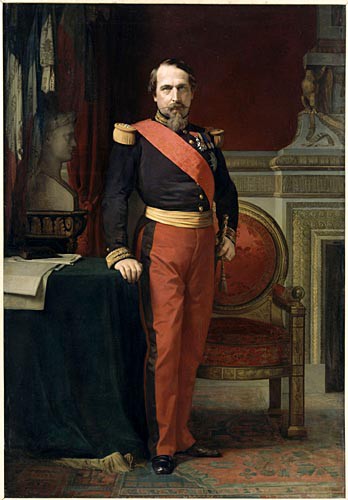
Life of Napoleon

                              
To be frank no actual personal was identified to be the first napoleon.So we take it from here.
Prince Louis Napoleon was forty when he won the election for the French Presidency in 1848, a small, reserved, enigmatic man with chestnut hair, brown beard and a pointed moustache. Polling well over 5 million votes, he won one of the most remarkable victories in French history, though he had never held public office or distinguished himself in any worthwhile capacity. The nostalgic vote which carried him to power looked back to the greatness of France under his uncle, Napoleon I, whose name he carried and whose heir he claimed to be.
Charles Louis Napoleon Bonaparte, born in Paris in 1808, was both the nephew of Napoleon I and the grandson of the Empress Josephine. His father, who was king of Holland at the time (and who had doubts about whether the boy was really his), was Napoleon I's brother Louis. His mother was Hortense de Beauharnais, Josephine's daughter by her first husband.
Louis Napoleon last saw the first Napoleon as a boy of seven and grew up in exile in Switzerland and Germany, imbibing from his mother a profound admiration for his uncle's genius and a romantic longing for France, his lost homeland. The death in Vienna in 1832, at the age of twenty-one, of Napoleon I's only son, the Duke of Reichstadt, allowed Louis Napoleon to regard himself as the true Bonaparte heir and he made vain attempts to bring off coups in France in 1836 and in 1840.

Louis-Napoléon’s childhood and youth were spent largely in exile. His mother, like all the Bonapartes, was banished from France in 1815 after the fall of Napoleon I. Eventually, she found a new home in Switzerland, where, in 1817, she bought the castle of Arenenberg. Of romantic disposition herself, she inspired young Louis-Napoléon with a longing for his lost fatherland, as well as with enthusiastic admiration of the genius of Napoleon I. After attending a grammar school at Augsburg, Ger. (1821–23), her “sweet stubborn boy” was taught by private tutors.

How did Napoleon came to power?
 Napoleon came into power in France due to military success in Italy, as well as his attack on the French Revolutionary government while it was under assault by a Parisian mob. On November 9th and 10th, 1799, he was put into power with two other consuls, Sieyes and Ducos.

Claim to the throne 
After the death in 1832 of his cousin the Duke of Reichstadt (Napoleon I’s only son), Louis-Napoléon considered himself his family’s claimant to the French throne. To be better prepared for his task, he completed his military training and pursued his studies of economic and social problems. Soon after, he felt ready to publish his own writings on political and military subjects.Napoleon III In his pamphlet “Rêveries politiques” (1832), he asserted that only an emperor could give France both glory and liberty. He thus wanted to make his name known, propagate his ideas, and recruit adherents. Convinced that as Napoleon’s nephew he would be popular with the French army, he vainly tried, on Oct. 30, 1836, to win over the Strasbourg garrison for a coup d’état. King Louis-Philippe exiled him to the United States, from which he was recalled early in 1837 by his mother’s last illness. Expelled from Switzerland in 1838, he settled in England.


The French Academy.

                                       
The origins of the academy were in a coterie of literary men who met informally in Paris in the early 1630s to discuss rhetoric and criticism. Recognized by Cardinal Richelieu, the academy received the royal letters patent in 1635 (registered by the Parlement of Paris in 1637). Its aims included chiefly the governance of French literary effort, grammar, orthography, and rhetoric. The membership was soon fixed at 40 (called often, because of their former motto, "the forty immortals" ) and was established as self-perpetuating, with a veto of elections reserved to the official protecteur (or patron), later to the state. The first notable act of the society was the criticism of the Cid of Pierre Corneille.

After Richelieu's death (1642) the patronate went (1643) to Pierre Séguier, the chancellor; on his death (1672), King Louis XIV assumed the position of protecteur, which remained ever after a prerogative of the head of the French state. The suppression of the academies in 1793 ended the French Academy; it reappeared in the second class of Napoleon's Institut (1803), and the old name and organization were "restored" in the first division of the Institut of 1816.

The academy has often been accused of literary conservatism, owing to the failure of certain writers to attain membership; the most prominent of these are perhaps Molière, Marquis de La Rochefoucauld, Duc de Saint-Simon, Jean Jacques Rousseau, Honoré de Balzac, Gustave Flaubert, Stendhal, Émile Zola, and Marcel Proust. But not all omissions from the academy roster are attributable to literary criteria, for personal respectability and loyalty to the existing state have always been conditions of membership. The membership of the academy has traditionally included eminent Frenchmen outside the field of literature; some of its members come from France's senior clergy to mark the role of Roman Catholicism in French culture. Today the academy's membership includes women and people of other nationalities who write in French.


Functions                                             


The work of the French Academy has chiefly consisted of the preparation and revision of a dictionary (1st ed. 1694, 9th ed. 1992–) and of a grammar. The very conservative attitude of these books toward orthography, new words, and grammatical development has led to much criticism. The academy, however, has never claimed to legislate but simply to record forms; legislation on orthography and grammar was made a function of the minister of public instruction during the Third Republic. The awarding of literary prizes has also been an important function of the French Academy, and in the 19th cent. its nonpartisanship encouraged the general recognition of the academy as a suitable trustee for the distribution of grants and prizes for courage and civic virtue.

How To Make a Car - Powered Car - Very Simple

“We are kept keen on the grindstone of pain and necessity.”
― H.G. Wells,
The Time Machine

Wednesday, 5 July 2017

The mere presence of your smartphone reduces brain power, study shows

Image result for images of phones
The researchers found that participants with their phones in another room significantly outperformed those with their phones on the desk.
Your cognitive capacity is significantly reduced when your smartphone is within reach -- even if it's off. That's the takeaway finding from a new study from the McCombs School of Business at The University of Texas at Austin.
McCombs Assistant Professor Adrian Ward and co-authors conducted experiments with nearly 800 smartphone users in an attempt to measure, for the first time, how well people can complete tasks when they have their smartphones nearby even when they're not using them.
In one experiment, the researchers asked study participants to sit at a computer and take a series of tests that required full concentration in order to score well. The tests were geared to measure participants' available cognitive capacity -- that is, the brain's ability to hold and process data at any given time. Before beginning, participants were randomly instructed to place their smartphones either on the desk face down, in their pocket or personal bag, or in another room. All participants were instructed to turn their phones to silent.
The researchers found that participants with their phones in another room significantly outperformed those with their phones on the desk, and they also slightly outperformed those participants who had kept their phones in a pocket or bag.
The findings suggest that the mere presence of one's smartphone reduces available cognitive capacity and impairs cognitive functioning, even though people feel they're giving their full attention and focus to the task at hand. "We see a linear trend that suggests that as the smartphone becomes more noticeable, participants' available cognitive capacity decreases," Ward said. "Your conscious mind isn't thinking about your smartphone, but that process -- the process of requiring yourself to not think about something -- uses up some of your limited cognitive resources. It's a brain drain."Image result for images of phones
In another experiment, researchers looked at how a person's self-reported smartphone dependence -- or how strongly a person feels he or she needs to have a smartphone in order to get through a typical day -- affected cognitive capacity. Participants performed the same series of computer-based tests as the first group and were randomly assigned to keep their smartphones either in sight on the desk face up, in a pocket or bag, or in another room. In this experiment, some participants were also instructed to turn off their phones.
The researchers found that participants who were the most dependent on their smartphones performed worse compared with their less-dependent peers, but only when they kept their smartphones on the desk or in their pocket or bag.
Ward and his colleagues also found that it didn't matter whether a person's smartphone was turned on or off, or whether it was lying face up or face down on a desk. Having a smartphone within sight or within easy reach reduces a person's ability to focus and perform tasks because part of their brain is actively working to not pick up or use the phone.
"It's not that participants were distracted because they were getting notifications on their phones," said Ward. "The mere presence of their smartphone was enough to reduce their cognitive capacity."

Ancient Swiss reptile shows its bizarre scale armor for the first time.

Reconstruction of Eusaurosphargis dalsassoi.
Credit: Beat Scheffold, Paleontological Institute and Museum, University of Zurich
Grisons, 241 million years ago -- Instead of amidst high mountains, a small reptile suns itself on an island beach in a warm shallow sea, where many fish and marine reptiles frolic. This is the story told by an excellently preserved new discovery of the reptile Eusaurosphargis dalsassoi studied by paleontologists from the University of Zurich.
About 20 centimeters in length, the Swiss reptile was small and juvenile, but its skin was already strongly armored with variously formed smooth, jagged or even thorny osteoderms. Its skeleton indicates a life on land, even though the animal was found together with fish and marine reptiles in the 241 million year old calcareous deposits of the Prosanto Formation near Ducanfurgga at an altitude of 2,740 meters south of Davos in the canton Grisons, Switzerland. The Swiss-British team of researchers led by Torsten Scheyer, paleontologist at the University of Zurich, and James Neenan from the Oxford University Museum of Natural History therefore assumes that it was washed off a nearby island into the sea basin and became embedded in the finely layered marine sediments after death.
Skeleton and appearance reconstructed
14 years ago, the species Eusaurosphargis dalsassoi was described using a partially preserved, completely disarticulated sample from the vicinity of the Swiss-Italian UNESCO World Heritage Site Monte San Giorgio. The new find from the Grisons Mountains, on the other hand, is very well-preserved, allowing researchers to reconstruct the skeleton and outward appearance of the animal for the first time.
In the process, they discovered something astonishing: Externally, Eusaurosphargis dalsassoi looks very similar to girdled lizards (Cordylidae), a group of small, scaled reptiles (Lepidosauria) that usually live in the dry regions of southern Africa. Some of the more strongly armored girdled lizard species could have served as the basis of mythical dragon legends due to their appearance. "This is a case of convergent development as the extinct species is not closely related to today's African lizards" , Scheyer explains.
Related to Helveticosaurus
An exact examination of the phylogenetic relationships rather confirms that its closest relatives are marine reptiles such as ichthyosaurs (Ichthyosauria or "fish lizards"), sauropterygians (Sauropterygia "lizard flippers") or even Helveticosaurus, a marine reptile that is unique to Switzerland, all of which have been found at Monte San Giorgio. The skeleton of Eusaurosphargis, however, shows neither a streamlined body structure, nor arms and legs that have transformed into flippers, as well as no tail fin, which would indicate a life at sea.

Drawing

     “Where do new ideas
                                                                                   Inline image 2

come from?

Inline image 5

The answer is

Inline image 3                                                                                                                        Inline image 8

 simple: differences. Creativity                                                                                                                                                                                                                                                           Inline image 1

from unlikely juxtapositions.  –Nicholas Negroponte

Académie française

  In the French educational system an académie is an administrative unit. Image result for image of the academie francaise
The Académie française, or French Academy, is the pre-eminent French learned body on matters pertaining to the French language. The Académie was officially established in 1635 by Cardinal Richelieu, the chief minister to King Louis XIII. Suppressed in 1793 during the French Revolution, it was restored in 1803 by Napoleon Bonaparte. It is the oldest of the five académies of the Institut de France.

The Académie consists of forty members, known as immortels (immortals). New members are elected by the members of the Académie itself. Academicians hold office for life, but they may be removed for misconduct. The body has the task of acting as an official authority on the language; it is charged with publishing an official dictionary of the language. Its rulings, however, are only advisory, not binding on either the public or the government.
 
History 
Cardinal Richelieu was responsible for the establishment of the Académie française.   .Image result for image of the academie francaise

The Académie's origins lie in an informal group that met to discuss literature during the late 1620s and early 1630s. Cardinal Richelieu, the chief minister of France, later took the body under his protection. In anticipation of the formal creation of the body, several members were appointed in 1634. On 22 February 1635, at Richelieu's urging, King Louis XIII granted letters patent formally establishing the body; the letters patent were registered at the Parlement de Paris on 10 July 1637. The Académie française was responsible for the regulation of French grammar, orthography, and literature.

During the French Revolution, the National Convention suppressed all royal academies, including the Académie française. In 1792, the election of new members to replace those who died was prohibited; in 1793, the academies were themselves abolished. They were all replaced in 1795 by a single body called the Institut de France, or Institute of France. Napoleon Bonaparte, as First Consul, decided to restore the former academies, but only as "classes" or divisions of the Institut de France. The second class of the Institut was responsible for the French language, and corresponded to the former Académie française. When King Louis XVIII came to the throne in 1816, each class regained the title of "Académie"; accordingly, the second class of the Institut became the Académie française. Since 1816, the existence of the Académie française has been uninterrupted.


The President of France is the "protector" or patron of the Académie. Cardinal Richelieu originally fulfilled this role; upon his death in 1642, Pierre Séguier, the Chancellor of France, succeeded him. King Louis XIV took over the function when Séguier died in 1672; since then, the French head of state has always served as the Académie's protector. From 1672 to 1805, the official meetings of the Académie were held at the Louvre; since 1805, the Académie française has met at the Collège des Quatre Nations (now known as the Palais de l'Institut).

Basic Beliefs of Christian versus Muslim


Belief in What Christians Believe What Muslims Believe
God God is three gods merged into one God. This one God is called a Trinity. However, to say that God is three is a blasphemy of the highest order. All three parts of the Trinity are "coequal" "co-eternal" and "the same substance." For this reason, this doctrine is described as "a mystery."  God is one God in the most basic, simple, and elementary meaning of the word. He has no children, no parents nor any equal. In Islam God is known by the name "Allah" and more than 99 other venerated names, such as "the Merciful," "the Gracious," "the All-Powerful," etc.
Jesus The second member of the Triune God, the Son of the first part of the Triune God, and at the same time "fully" God in every respect.  A very elect and highly esteemed messenger of God. No Muslim is a Muslim if he does not believe this. Image result for image oF THe Jesus
The Holy Spirit The third member of the Triune God, but also "fully" God in every respect.  He is the angel Gabriel. The angel Gabriel is highly esteemed as the "Trustworthy Spirit" Image result for image of HOLY SPIRIT
Mary the mother of Jesus A chaste and pious human woman who gave birth to Jesus Christ, the second member of the Trinity, the Son of God, and at the same time "fully" God Almighty in every respect.  A chaste and pious human woman who was chosen, purified, and preferred over all of the women of creation to be the one to give birth to Gods elect messenger Jesus through the command of God without any father whatsoever. Image result for image oF MARY THE MOTHER OF jESUS
The Word Part of God which was "with" God but also "fully" God and then became Jesus the Son of God.  God's command "Be!" which resulted in Jesus' conception in the womb of Mary without the need for a human father. Image result for image oF THe bible


The Bible Accepted as 100% the faultless word of God  Muslims believe in the books of the previous prophets including the "Torah" which was sent to Moses, the "Zaboor" (Psalms) which were given to David, the "Injeel" (Gospel) which was given to Jesus, and the Qur'an which was given to Muhammad However, Muslims are told that the previous scriptures were tampered with by mankind and the Bible should only be accepted in as far as it is confirmed by the Qur'an. It is to be treated with respect, however any statements which clearly oppose those of the Qur'an are to be rejected as the work of mankind. Image result for image oF THe bible


The Qur'an Varying beliefs ranging from it being a copy of the Bible to it being the work of Muhammad (pbuh), to it's being the work of Christians and Jews who were conspiring with Muhammad.  The last book of God sent to mankind. It was given the distinction of being personally guarded by God from human tampering. It is on a literary level never before seen by mankind. No Arab to this day has ever been able to meet it's challenge to "write a work similar to it." It shall remain safe from the tampering of mankind till the day of Judgment as a guidance for all Humanity. 
Message of Jesus That he was sent by God (who was at the same time "fully" Jesus) in order to die on the cross and save all mankind from the sin of Adam. Without this sacrifice all of humanity was destined to perish in the sin of Adam. After the crucifixion all that is required of humanity is faith without any works.  That he was sent by God as a messenger to the Jews in order to return them to the pure and true religion of Moses, and to relieve them of some of the regulations which had been placed upon them in ancient times. He taught them to have faith as well as works. Neither one can stand alone. Image result for image oF message


The second coming of Jesus. Accepted. Originally expected to happen during the lifetime of the first disciples, many predictions have been made later and he is still expected at any moment. He is currently anticipated to arrive around the turn of the century (2000 C.E.)  Accepted. Jesus did not die but was raised up into heaven by God. He shall return to earth just before the Day of Judgment in order to kill the "False Messiah" and to establish peace and justice on earth. He will kill the pigs, break the cross, and call all humanity to Islam. Image result for image of second coming of jesus
The original sin All of humanity has inherited the sin of Adam. Only the death of the sinless offspring of God could erase this sin. No one is born clean, no matter if his life is only for a single day. Only baptism and faith in the death of Jesus can save one from this destiny.  There is no such thing. Humanity is created by God destined for heaven unless they chose to disobey Him and refuse His mercy. God can very trivially and effortlessly forgive the sins of all of Humanity no matter if they were to fill the lofty regions of the sky. Such a matter would be trivial and inconsequential for Him since He has already done much more than that such as creating everything we can ever see, hear or imagine. He loves to bestow His mercy and forgiveness on His creation and rewards the most trivial acts with the most tremendous rewards. In order to achieve God's reward one must have faith as well as works Image result for image of sin
The atonement The sin of Adam was so great that God could not forgive it by simply willing it, rather it was necessary to erase it with the blood of a sinless innocent god named Jesus who was also "fully" God.  Adam "atoned" for his sin by saying "My Lord I have sinned and if you do not forgive me and have mercy upon me then I shall indeed have lost." So God forgave him. Similarly, all human beings have the door to forgiveness left open to them by God until the day they die. There are no intermediaries between mankind and God. If they sincerely repent to God, ask His forgiveness, and forsake their evil deeds before their hour comes then He shall forgive them and there is nothing more pleasing to Him than to forgive the sins of one who comes to Him in sincere repentanceImage result for image of atonement of sins
The path to salvation If you have faith in the atonement of Jesus for the sin of Adam which you have inherited then you shall be saved. You only need faith. No work is necessary.  If you have faith in God, believe in His messengers, and obey His commands then He shall multiply every single good deed that you do many, many times and erase your evil deeds, until on the Day of Judgment His mercy shall cause your good deeds to far outweigh your evil deeds and grant you passage into an ecstasy and Paradise so great that we can not even imagine it, to abide there eternally. In the Hereafter there is only reward and no work.Image result for image of the path of salvation